 Kinyarwanda
 English
 Français
 Swahili
















Rwanda’s Economic Growth and Political Stability: A Delicate Balance in 2026
Written by Janvier Nduwumukiza

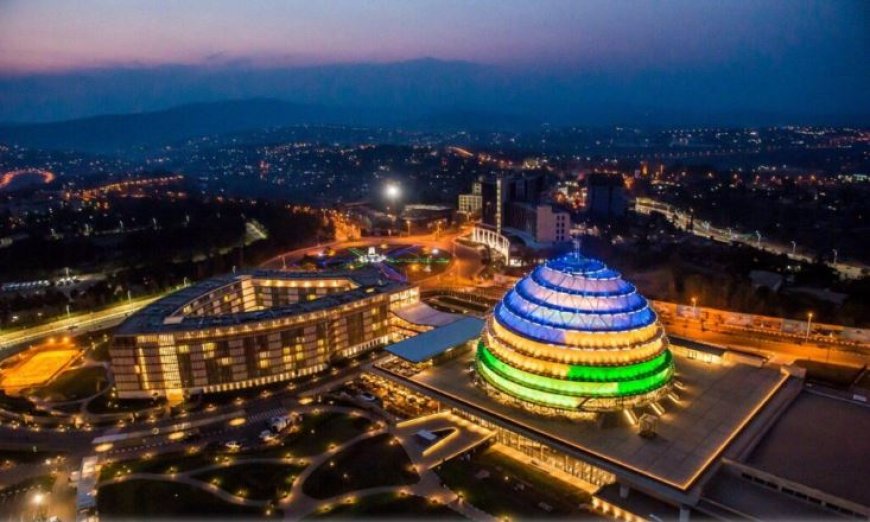
Rwanda continues to stand out as one of Africa’s fastest-growing economies, maintaining robust growth while navigating complex political and regional challenges. According to the International Monetary Fund, Rwanda’s GDP is projected to expand by 7.2% in 2026, driven primarily by services, construction, and agricultural exports. The country’s economy has been particularly resilient, with the third quarter of 2025 recording an impressive 11.8% year-on-year growth, bolstered by strong contributions from services (+10%), industry (+17%), and agriculture (+10%).
This sustained growth reflects Rwanda’s careful economic planning, including the implementation of the National Strategy for Transformation (NST2) and the long-term Vision 2050, which aim to modernize agriculture, expand services, and boost productivity across sectors. In addition, Rwanda is positioning itself as a regional financial hub through its Financial Sector Development Strategy (FSDS 2025–2030), designed to increase financial inclusion, expand SME credit, and support the growth of fintech solutions.
Political stability remains a cornerstone of Rwanda’s success. The government’s governance record and strong institutional frameworks have contributed to a relatively stable political environment, which Fitch Ratings cited in reaffirming Rwanda’s credit rating at B+ stable. While this stability underpins investor confidence, external vulnerabilities, including rising public debt nearing 80% of GDP and dependence on concessional financing, remain challenges that require careful fiscal management.
Regionally, Rwanda continues to navigate a complex diplomatic landscape. Relations with neighboring countries, particularly the Democratic Republic of Congo, influence both security and economic dynamics. The country’s proactive foreign policy seeks to balance regional cooperation with safeguarding national interests, especially given ongoing tensions in eastern DRC.
For ordinary Rwandans, these trends carry both promise and caution. While economic growth offers job opportunities and improved services, youth unemployment, rural inequality, and the pressures of rising debt remain pressing concerns. Government strategies emphasize ensuring that growth benefits reach all citizens, particularly young people and rural communities.
Overall, Rwanda in 2026 presents a story of cautious optimism. Its rapid economic expansion and political stability position it as a model for regional development, yet careful management of debt, social inclusion, and regional diplomacy will be critical to sustaining this trajectory. The coming years will reveal whether Rwanda can maintain its remarkable growth while ensuring that prosperity is inclusive and resilient.
What's Your Reaction?
 Like
0
Like
0
 Dislike
0
Dislike
0
 Love
1
Love
1
 Funny
0
Funny
0
 Angry
0
Angry
0
 Sad
1
Sad
1
 Wow
0
Wow
0