 Kinyarwanda
 English
 Français
 Swahili






























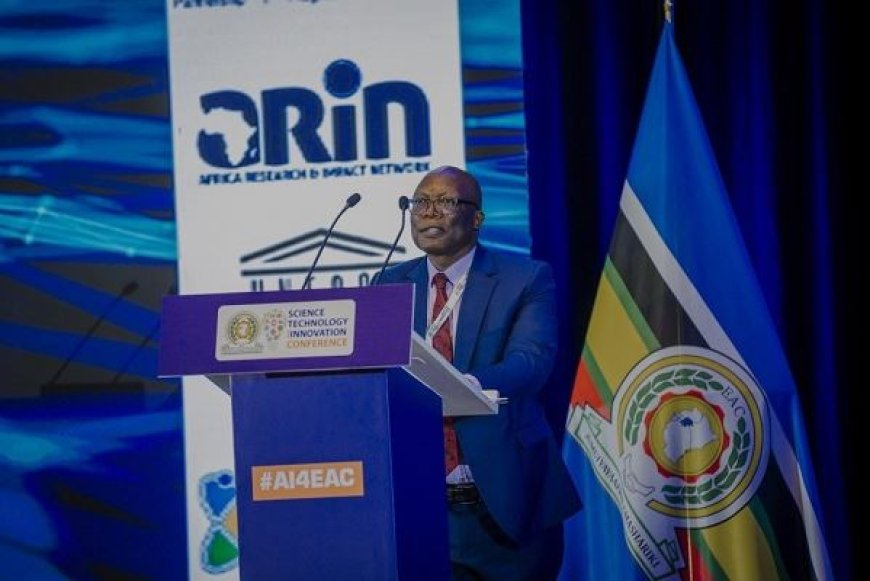
EASTECO Executive Secretary Dr. Sylvance Okeyo Okoth Says AI Education Efforts Fall Short of Growing Demand
Written by Napoleon Mugenzi

KIGALI, Rwanda (AP)
African policymakers and technology leaders have been urged to prioritize foundational frameworks for artificial intelligence (AI) adoption, as the region risks falling behind without clear policies, infrastructure, and coordinated investment.
Opening the regional conference in Kigali, Executive Secretary of the EAC Science and Technology Commission, Dr. Sylvance Okeyo Okoth, emphasized that while AI presents transformative opportunities, the region’s current capacity remains limited.
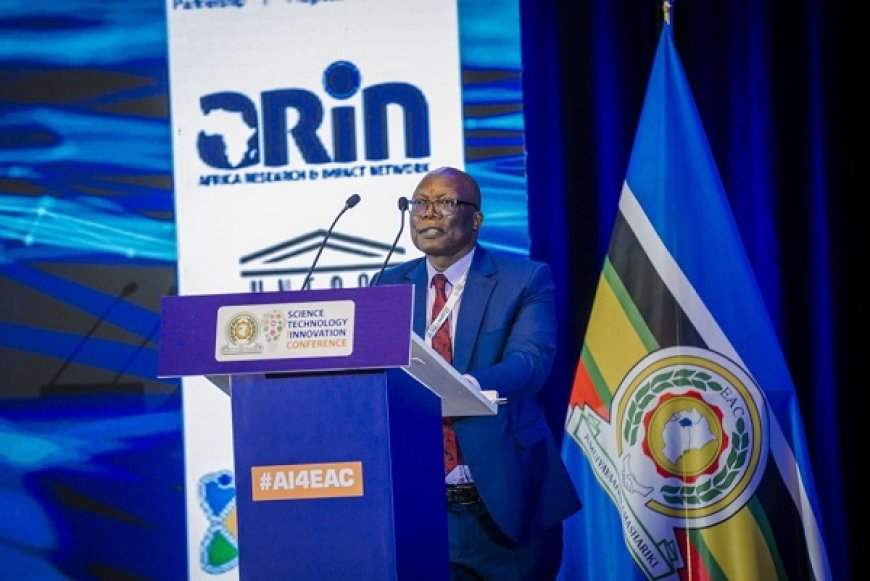
EASTECO Executive Secretary Dr. Sylvance Okeyo Okoth Says AI Education Efforts Fall Short of Growing Demand
He noted that existing efforts in AI education and training across East Africa fall short of growing demand. Although partnerships with universities and pilot programs in secondary schools are underway, Okoth stressed the need for a more structured and scalable approach.
“The demand for AI skills is growing rapidly, but our current systems cannot meet it. Establishing a dedicated regional center of excellence for AI training would be a more efficient and cost-effective solution,” he said.
Okoth also highlighted a critical gap in governance, warning that several member states lack national AI policies, making it difficult to implement regional strategies effectively.
Adding to the concerns, Andrea Aguer Ariik Malueth, Deputy Secretary General of the East African Community in charge of infrastructure, productivity, social and political sectors, said the region must take stock of its current readiness before accelerating AI deployment.
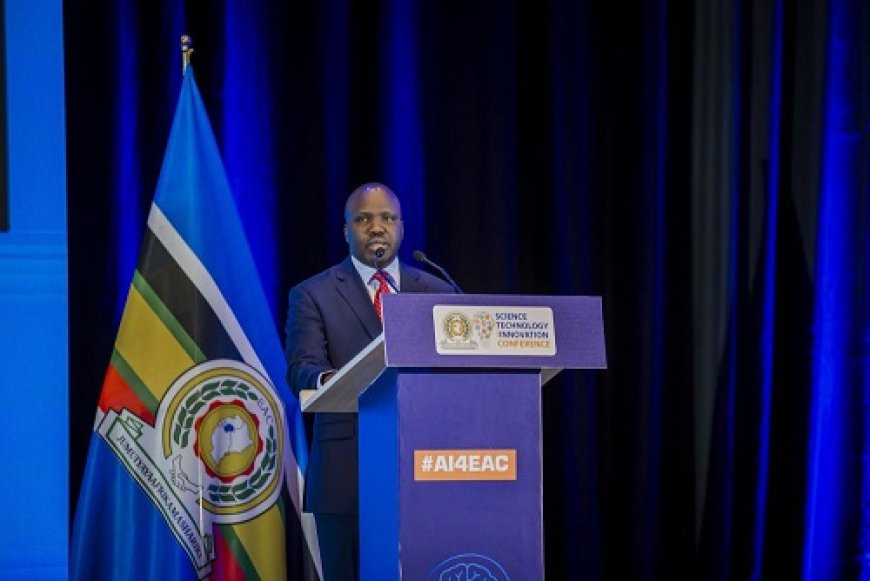
EAC Deputy Secretary General Andrea Aguer Ariik Malueth Says Member States Face Major Gaps in Establishing AI Foundations
She acknowledged that while the EAC STI Policy 2023–2033 outlines ambitions to leverage AI for development, significant structural gaps remain.
“We must first understand where we stand as a region. We are facing challenges including limited technical expertise, inadequate infrastructure, and gaps in research and innovation,” she said.
Malueth also stressed the need for dedicated regulatory institutions to oversee AI use, warning that failure to address these gaps could widen inequalities and delay meaningful adoption across member states.
Rwanda Calls for Policy and Data Protection Frameworks
Rwanda’s Minister of ICT and Innovation, Paula Ingabire, reinforced the urgency of establishing regulatory foundations as a first step toward meaningful AI adoption across the East African Community.
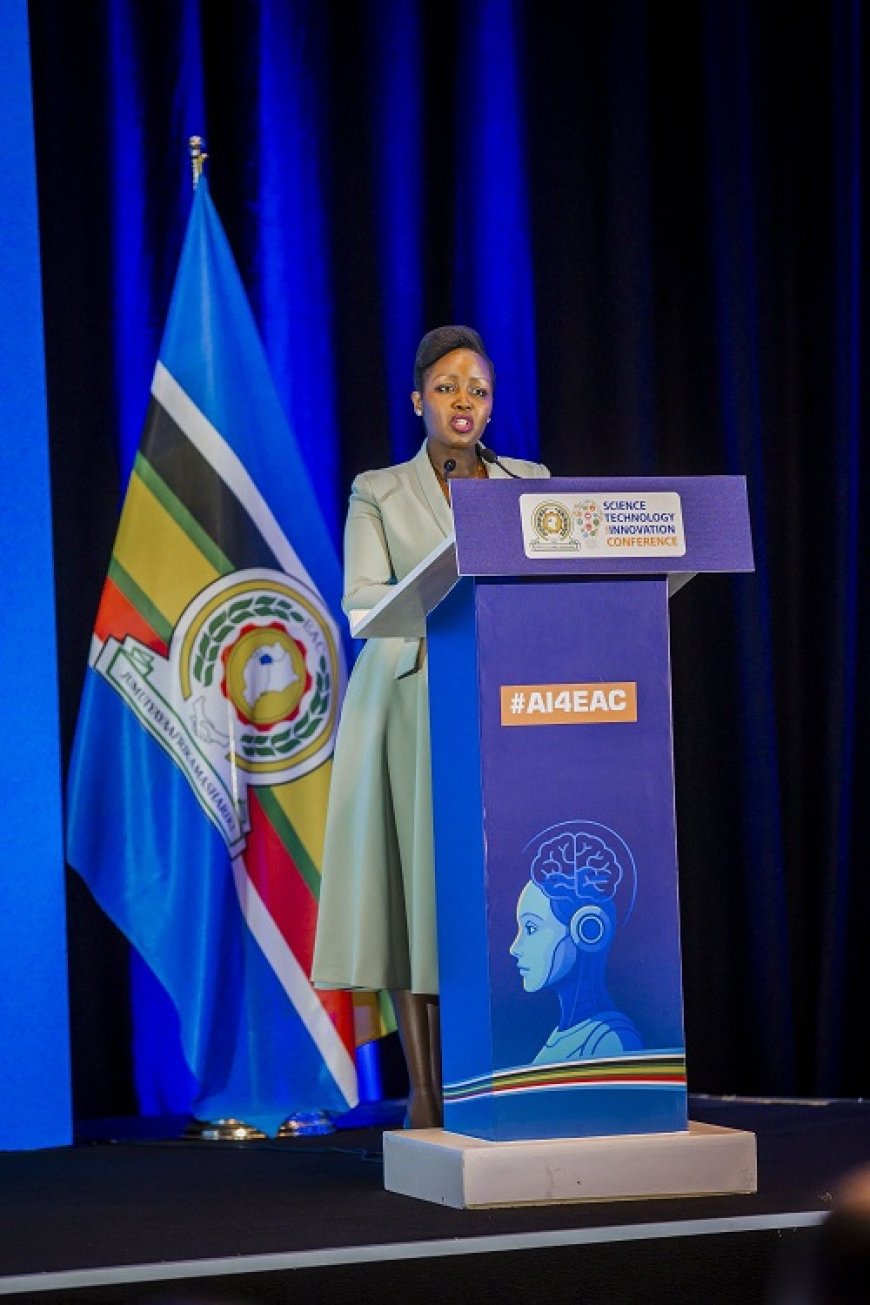
Rwanda’s Minister of ICT and Innovation, Paula Ingabire, said that among the first steps the EAC should take to promote AI adoption is establishing policies and regulatory frameworks to govern its use
She pointed out that without clear policies, legal frameworks, and data protection systems, the region risks fragmented development and limited trust in AI technologies.
“Before scaling AI, we must ensure we have the right governance structures in place policies, regulations, and data protection mechanisms that safeguard users and enable innovation,” Ingabire said.
In a keynote address, Amine Idriss Adoum, a senior official at AUDA-NEPAD, called for a shift toward industrial applications of AI as a driver of economic growth.
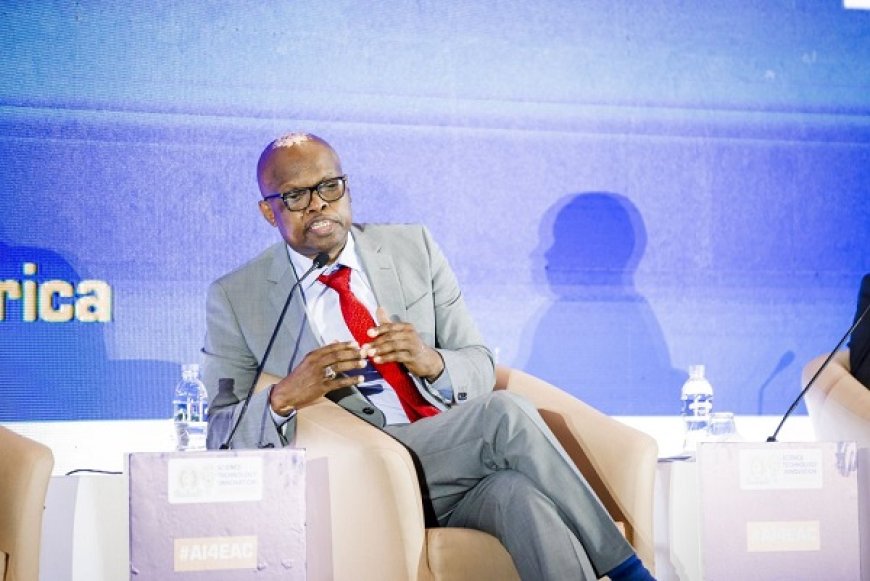
AU Development Agency Official Amine Idriss Adoum Urges Industrial Adoption of AI to Accelerate Africa’s Growth
Adoum argued that integrating AI into manufacturing and production sectors would not only accelerate adoption but also create jobs and stimulate demand for technical skills.
“Africa must focus on practical applications of AI, particularly in industry, where it can generate employment and drive large-scale economic transformation,” he said.
Regional Challenges Persist Despite Strategic Vision
Despite ambitions outlined in the EAC STI Policy 2023–2033, leaders acknowledged that AI adoption in the region remains constrained by limited technical expertise, inadequate digital infrastructure, weak research and innovation ecosystems, and the lack of regulatory oversight institutions.
Officials warned that without addressing these challenges, the gap between those with access to AI technologies and those without will continue to widen.
Panel Discussions Emphasize Multi-Stakeholder Action
The conference concluded with panel discussions bringing together government officials, private sector leaders, researchers, and development partners.
Participants called for stronger collaboration between the public and private sectors, increased investment in digital infrastructure, harmonized regional policies to support cross-border innovation, and expanded education and reskilling programs to equip youth for the AI-driven economy.
Panelists also underscored the importance of aligning AI development with Sustainable Development Goals (SDGs), particularly in sectors such as healthcare, agriculture, and education.
AI’s Economic Potential for Africa
According to projections by the African Development Bank, AI could contribute up to $1 trillion to Africa’s GDP by 2035, create between 35 and 40 million tech jobs, and generate $150 billion in tax revenues.
However, experts at the Kigali conference agreed that realizing this potential will depend on how quickly African governments can move from strategy to implementation.
As East Africa positions itself within the global AI race, the message from Kigali was clear: without strong foundations policy, skills, and infrastructure the region risks missing out on one of the most transformative technologies of the century.
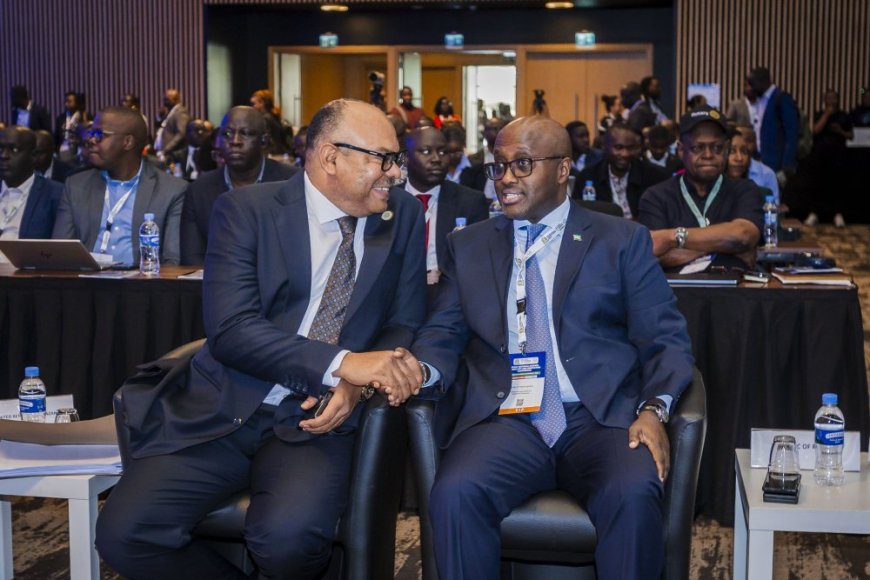
Foreign Minister Olivier Nduhungirehe is attending the EAC meeting on the use of AI
What's Your Reaction?
 Like
0
Like
0
 Dislike
0
Dislike
0
 Love
0
Love
0
 Funny
0
Funny
0
 Angry
0
Angry
0
 Sad
0
Sad
0
 Wow
0
Wow
0